Feb. 22 (Bloomberg) -- Secretary of State Hillary Clinton urged China to continue buying U.S. Treasury bonds to help finance President Barack Obama’s stimulus plan, saying “we are truly going to rise or fall together.”
“Our economies are so intertwined,” Clinton said in an interview today in Beijing with Shanghai-based Dragon Television. “It would not be in China’s interest” if the U.S. were unable to finance deficit spending to stimulate its stalled economy.
The U.S. is the single largest buyer of the exports that drive growth in China, the world’s third-largest economy. China in turn invests surplus earnings from shipments of goods such as toys, clothing and steel primarily in Treasury securities, making it the world’s largest holder of U.S. government debt at the end of last year with $696.2 billion.
China’s leaders understand that “the United States has to take some very drastic measures with the stimulus package, which means we have to incur debt,” Clinton said. The Chinese are “making a very smart decision by continuing to invest in Treasury bonds,” which she called a “safe investment,” because a speedy U.S. recovery will fuel China’s growth as well.
China boosted purchases of U.S. debt by 46 percent last year to a record. The Chinese government said last week it plans to keep buying Treasuries, adding that future purchases will depend on the preservation of their value and the safety of the investment. China’s currency reserves of $1.95 trillion are about 29 percent of the world total.
‘No Viable Alternative’
JPMorgan Chase & Co. predicted in a Feb. 6 report that China will keep buying Treasuries “not only for the near-term stability of the global financial system, but also because there is no viable and liquid alternative market in which to invest China’s massive and still growing reserves.”
Chinese attempts to diversify from Treasuries into more risk-oriented assets have not fared well. It has lost at least half of the $10.5 billion it invested in New York-based Blackstone, Morgan Stanley and TPG Inc. since mid-2007.
Asked by Dragon TV about the “Buy American” provision in the $787 billion stimulus package, Clinton downplayed worries that it would be a step toward protectionism, saying the provision “must be compliant with our international agreements.”
“Protectionism is not in America’s interest,” she said.
Clinton also said today that Treasury Secretary Timothy Geithner will co-chair an expanded bilateral dialogue on strategic and economic issues. The framework of that dialogue will be announced in April, when Obama and Chinese President Hu Jintao meet at the Group of 20 forum in London.
Treasury, State
Under the Bush administration, the U.S. and China held a Strategic Economic Dialogue run by the Treasury Department, without the assistance of the secretary of state.
Clinton said the Obama administration felt that model was “very heavily dominated by economic concerns and by traditional Treasury priorities. They are very important, but that is not the only high-level dialogue that needs to occur.”
Clinton was in China to meet with senior Chinese officials yesterday, including Hu, Premier Wen Jiabao and Foreign Minister Yang Jiechi.
Today Clinton privately attended services at the Haidian Christian Church. She also met in the U.S. Embassy with 23 women activists in law, gender equality, poverty, AIDS and children’s rights, a continuation of similar gatherings she held when she visited China as first lady in the 1990s.
Human Rights Groups
She didn’t meet with any dissidents during her stay, and was criticized by overseas human rights groups for saying that U.S. concerns about restrictions on freedoms in China must not interfere with cooperation on financial crisis, global warming, negotiations about North Korean nuclear program and terrorism.
China was the last leg of her first overseas trip as the top U.S. diplomat, which included stops in Japan, Indonesia and South Korea.
“World events have given us a full and formidable agenda,” Clinton said yesterday at a Beijing press conference with Yang following a 90-minute meeting. “It is essential that the United States and China have a positive cooperative relationship.”
Yang will visit the U.S. on March 9 for further discussions about the new strategic and economic dialogues.
The Chinese government’s 4 trillion yuan ($585 billion) stimulus plan is an opportunity for global businesses to take part in the country’s infrastructure construction, Yang said.
China’s Economy
China, which surpassed Germany in 2007 as the world’s third- largest economy, is confident of meeting this year’s 8 percent growth target, an achievement Yang says is “China’s contribution to the world economic recovery.”
Clinton and Chinese officials also discussed how to restart stalled talks, hosted in Beijing, aimed at getting North Korea to eliminate its nuclear weapons program.
Clinton said she had raised the issue of human rights in her talks with Yang, calling those concerns “an essential component of our global foreign policy.”
The U.S. State Department accuses China of political repression in Tibet and restrictions on worship throughout China. Groups including Amnesty International and Human Rights Watch said that Clinton shouldn’t set those concerns aside while talking with Chinese officials about other issues.
Power Plant Visit
After meeting Yang, Clinton and her special envoy for climate change, Todd Stern, visited the year-old Taiyanggong power plant, a gas-fired low-emission facility powered by General Electric Co. generators and turbines which provides heat for 1 million homes and buildings in Beijing, including the U.S. embassy. The tour was aimed at highlighting opportunities for the world’s two biggest emitters of greenhouse gases to cooperate on clean energy.
Clinton noted that China, with its rapid industrial development, has surpassed the U.S. as the largest source of carbon emissions and said collaboration on green energy would offer a business opportunity.
“The international financial crisis is having a big impact on the entire world,” Wen told Clinton at their meeting. “I very much appreciate your comment that people should work together like passengers in a boat.”
At an earlier meeting, State Councilor Dai Bingguo told Clinton that she looked “younger and more beautiful” than she appears on television.
“Well, we will get along very well,” Clinton laughed.
To contact the reporters on this story: Indira Lakshmanan in Beijing at ilakshmanan@bloomberg.net
Sunday, February 22, 2009
Hillary Clinton Begs to China to keep buying Treasuries

Thursday, February 19, 2009
Tuesday, February 17, 2009
Faces of the people who brought you THE financial Crisis
Alan Greenspan, Former Chairman of the Federal Reserve

Ben Bernanke, Current Chairman of the Federal Reserve

Jean-Claude Trichet, President of the European Central Bank

Henry Paulson, Former Treasury Secretary and Former CEO of Goldman Sachs

George Walker Bush, 43rd President of the United States

Adam Applegrath, Former CEO of Northern Rock

Daniel Mudd, Former CEO of Fannie Mae

Richard Syron, Former CEO of Freddie Mac

James Cayne, Last CEO of Bear Stearns

Richard S. Fuld, Last CEO of Lehman Brothers Holdings Inc.

Joey Cassano, Former Executive at American International Group (AIG) and father of the unhedged Credit Default Swap

Edward M. Liddy, CEO of American International Group (AIG)

Eric Daniels, CEO of Lloyds TSB

John Silvester Varley, Group Director of Barclays Bank

Stephen Hester, CEO of Royal Bank Of Scotland

Stan O' Neal, Former CEO of Merill Lynch

John Thain, Former CEO of Merill Lynch

Angelo Mozilo, Last CEO of Countrywide Financial

Charles Prince, Former CEO of Citigroup

Vikrim Pandit, CEO of Citigroup

Ken Lewis, CEO of Bank of America

Jamie Dimon, CEO of JPMorgan Chase

Alan H. Fishman, Last CEO of Washington Mutual

Lloyd Blankfield, CEO of Goldman Sachs

John J. Mack, CEO of Morgan Stanley

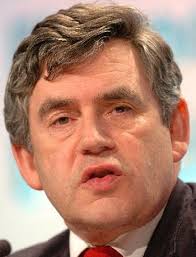
Gordon Brown, Prime Minister of the United Kingdom

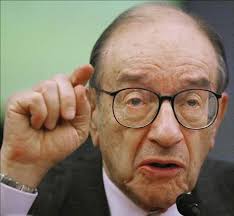
Ben Bernanke, Current Chairman of the Federal Reserve
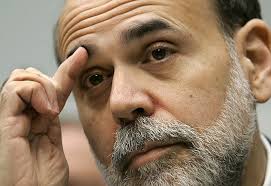
Jean-Claude Trichet, President of the European Central Bank

Henry Paulson, Former Treasury Secretary and Former CEO of Goldman Sachs
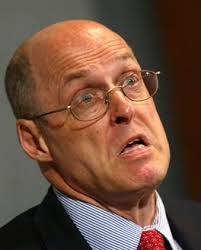
George Walker Bush, 43rd President of the United States
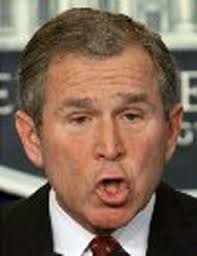
Adam Applegrath, Former CEO of Northern Rock

Daniel Mudd, Former CEO of Fannie Mae

Richard Syron, Former CEO of Freddie Mac

James Cayne, Last CEO of Bear Stearns

Richard S. Fuld, Last CEO of Lehman Brothers Holdings Inc.
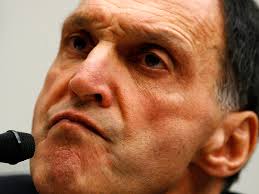
Joey Cassano, Former Executive at American International Group (AIG) and father of the unhedged Credit Default Swap

Edward M. Liddy, CEO of American International Group (AIG)
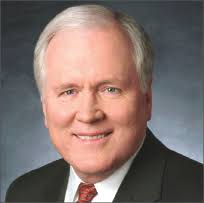
Eric Daniels, CEO of Lloyds TSB

John Silvester Varley, Group Director of Barclays Bank
Stephen Hester, CEO of Royal Bank Of Scotland

Stan O' Neal, Former CEO of Merill Lynch
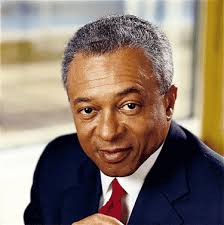
John Thain, Former CEO of Merill Lynch
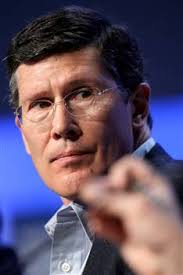
Angelo Mozilo, Last CEO of Countrywide Financial

Charles Prince, Former CEO of Citigroup

Vikrim Pandit, CEO of Citigroup

Ken Lewis, CEO of Bank of America
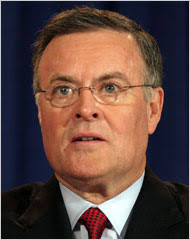
Jamie Dimon, CEO of JPMorgan Chase
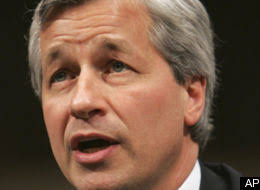
Alan H. Fishman, Last CEO of Washington Mutual
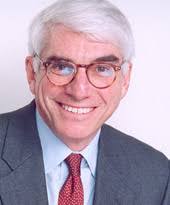
Lloyd Blankfield, CEO of Goldman Sachs

John J. Mack, CEO of Morgan Stanley

Gordon Brown, Prime Minister of the United Kingdom
Tuesday, February 10, 2009
Stimulus!
Today, the new Treasury Secretary Timothy Geithner unveiled the "new" stimulus package and the financial market immediately responded. The Dow Jones Industrial Average dropped 381.99 points to finish at 7888.88, and bond prices rose dramatically as well as gold and silver.
This stimulus package does not seem to be a viable plan to me and many others. Printing money, taking bad assets off banks, and creating jobs where they are not needed is not an efficient way to deal with the crisis. The government needs to let the private sector achieve equilibrium. By interfering, the private sector will never reach equilibrium and the government will only prolong the recession.
This stimulus package does not seem to be a viable plan to me and many others. Printing money, taking bad assets off banks, and creating jobs where they are not needed is not an efficient way to deal with the crisis. The government needs to let the private sector achieve equilibrium. By interfering, the private sector will never reach equilibrium and the government will only prolong the recession.
Saturday, February 7, 2009
Citigroup Hides Mystery Meat in Balance Sheet: Jonathan Weil
From Bloomberg:
Commentary by Jonathan Weil
Commentary by Jonathan Weil
Feb. 5 (Bloomberg) -- Even now, Citigroup Inc.’s bosses can’t get over their delusions of grandeur.
You can see their shiny optimism in a $44 billion balance- sheet item called deferred-tax assets, which is a fancy term for pent-up losses that the bank hopes to use later to cut its tax bills.
That figure tells you Citigroup’s executives, in spite of their bank’s near-collapse, are still forecasting future profits as far as the eye can see. They have every incentive to do this, too. If they ever turned pessimistic, the assets might go poof.
While you won’t find any mention of deferred taxes in Citigroup’s latest earnings release, this may be the most important asset on the bank’s books today. It also looks the fishiest, at more than three times what it was a year ago, and more than double the company’s $19 billion stock-market value.
Those assets represented 55 percent of Citigroup’s common shareholder equity as of Dec. 31. And one crucial question still unanswered is how much of that $44 billion Citigroup is including in its closely watched Tier 1 capital, the primary gauge the government uses to measure a bank’s ability to survive losses.
Deferred-tax assets, or DTAs, typically consist of losses carried forward from prior periods. Under the accounting rules, these carryforwards are valuable only to companies that make money and pay income taxes. If a company is losing money and doesn’t expect to be able to use these assets, it’s supposed to record an offset, or allowance, to reduce their value.
Deferred taxes also can take the form of carrybacks, which let companies claim refunds on past taxes paid.
Worth Every Cent
Citigroup’s chief financial officer, Gary Crittenden, disclosed the $44 billion figure during the company’s earnings conference call last month. He said the bank had made no adjustments to their value, on the grounds that “these DTAs are expected to be realized in the future periods.” Those periods, he said, extend as far as 20 years out.
The $44 billion is roughly equal to the taxes that would be owed on about $125 billion of income, assuming Citigroup had a 35 percent rate. Citigroup reported an $18.7 billion net loss for 2008. It’s hard to say when the bank might make money again.
This is the same Citigroup that didn’t see the subprime- mortgage meltdown coming, or the credit crisis, or that it would need federal bailouts to stay afloat. That hasn’t shaken its executives’ confidence in their ability to predict Citigroup’s profits for the next two decades, or their conviction that the tax assets are worth every cent of that $44 billion.
“Good luck making that kind of money,” says Robert Willens, a tax and accounting specialist who teaches at Columbia Business School in New York.
Looking Odd
The last time I wrote about this subject, back in November, Citigroup had just disclosed in filings with banking regulators that its net deferred-tax assets were $28.5 billion, as of Sept. 30. It included $18.5 billion of that amount in its Tier 1 capital. The upshot: About 19 percent of Citigroup’s $96.3 billion of Tier 1 consisted of deferred taxes at the time.
That looked odd for a few reasons. Under the Federal Reserve’s rules, the only way a bank can include carryforwards in Tier 1 is if it expects to use them all within 12 months. Even then, the rules say that carryforwards aren’t supposed to exceed 10 percent of a bank’s Tier 1 capital.
There’s no such limit on carrybacks. But Citigroup has never disclosed any information showing it has vast amounts of carrybacks. Willens estimates Citigroup’s carrybacks might be a few billion dollars, based on the bank’s federal tax provisions for 2007 and 2006. A Citigroup spokeswoman, Shannon Bell, declined to say how much of the bank’s DTAs were carrybacks.
Congressional Help
For a while, it seemed Congress might help Citigroup and other large banks by expanding the federal carryback period for operating losses to five years from two. Not anymore, though. Under a bill passed by the U.S. House of Representatives that’s now before the Senate, companies wouldn’t be eligible if they had accepted federal bailout money, which Citigroup did.
Citigroup hasn’t disclosed in dollar terms how much Tier 1 capital it had as of Dec. 31. Bell wouldn’t tell me that, either. Nor would she say how much of Citigroup’s Tier 1 capital at the end of 2008 came from deferred-tax assets.
Citigroup will have to disclose those figures in the coming weeks when it files its annual reports with securities and banking regulators. When it does, the bank’s executives are sure to face more questions about how these assets could be so big.
We’ll see if they come up with answers that show a firmer grasp on reality.
(Jonathan Weil is a Bloomberg News columnist. The opinions expressed are his own.)
To contact the writer of this column: Jonathan Weil in New York at jweil6@bloomberg.net

Wednesday, February 4, 2009
Peter Schiff videos 2/4/09
The following videos are the best Peter Schiff videos I have seen to date. He is the one of the only people who knows exactly what is going on right now and can explain it to us.
Part 1
Part 2
Part 3
Part 4
Part 1
Part 2
Part 3
Part 4
Wednesday, January 28, 2009
Revealed: Day the banks were just three hours from collapse and COMEX Silver Default
I just read an interesting article about how the collapse is very, very close to happening. It is extremely important to start moving out of U.S. dollars now and into REAL assets like gold and silver.
Reported by the Daily Mail on January 24th, 2009:
Revealed: Day the banks were just three hours from collapse
By Glen Owen
Last updated at 11:21 PM on 24th January 2009
Britain was just three hours away from going bust last year after a secret run on the banks, one of Gordon Brown's Ministers has revealed.
City Minister Paul Myners disclosed that on Friday, October 10, the country was 'very close' to a complete banking collapse after 'major depositors' attempted to withdraw their money en masse.
The Mail on Sunday has been told that the Treasury was preparing for the banks to shut their doors to all customers, terminate electronic transfers and even block hole-in-the-wall cash withdrawals.
Only frantic behind-the-scenes efforts averted financial meltdown.
If the moves had failed, Mr Brown would have been forced to announce that the Government was nationalising the entire financial system and guaranteeing all deposits.
But 60-year-old Lord Myners was accused last night of being 'completely irresponsible' for admitting the scale of the crisis while the recession was still deepening and major institutions such as Barclays remain under intense pressure.
The build-up to 'Black Friday' started on Monday, October 6, when the FTSE 100 dropped by nearly eight per cent as bad news on the economy started to multiply.
The following day, Chancellor Alistair Darling began all-night talks ahead of an announcement on the Wednesday that billions of pounds of taxpayers' money would be used to pour liquidity into the system.
But shares continued to plummet, turning into a rout on the Friday when the FTSE crashed by ten per cent within minutes of opening.
Both Royal Bank of Scotland and HBOS were nearing complete collapse - but Lord Myners, who built up his fortune during a long career in the City, said the problems ran far wider.
'There were two or three hours when things felt very bad, nervous and fragile,' he said. 'Major depositors were trying to withdraw - and willing to pay penalties for early withdrawal - from a number of large banks.'
The threat to the system was so severe that the Bank of England was forced to contact RBS's creditors in New York and Tokyo to persuade them not to withdraw their funds, but it is not known which other banks faced a run on their reserves.
'We faced the very real problem of how banks could stop depositors from withdrawing their money,' a Treasury source said yesterday.
'The banks themselves were selling their shareholdings, accelerating the stock-market falls, and preparing to shut up shop. Mortgages would have been sold on and savers would have been spooked, to put it mildly. It would have been chaos.'
After a weekend of crisis talks, which concluded at dawn on the Monday, it was announced that Lloyds TSB was taking over HBOS, supported by £17billion of taxpayers' money, and RBS would receive an injection of £20billion - prompting the resignation of RBS's infamous chief executive, Sir Fred 'the shred' Goodwin. Share prices at last started a small rally.
Ruth Lea, economic adviser to the Arbuthnot Banking Group, said last night that it was 'highly irresponsible' for Lord Myners to reveal the scale of the problems because it could serve to further wreck already fragile levels of confidence.
'We are not out of the woods yet,' she said. 'I fear for Barclays, after the fall in its share price, and Lloyds has been damaged by the HBOS takeover.'
She added: 'If it was panning out in that way, then the Government would have had no choice but to step in and nationalise the entire financial system.'
Angela Knight, chief executive of the British Bankers Association, said: 'The issues related only to HBOS and RBS. To imply that all the banks would have gone under is wrong. It is complicated.'
Lord Myners also said that bank executives had been 'grossly over-rewarded' during the 'golden days' of big bonuses. 'They are people who have no sense of the broader society around them,' he said. 'There is quite a lot of annoyance and much of that is justified.'
I just found a great video on YouTube by stellaconcepts about COMEX Silently defaulting on a silver bullion delivery. I've posted the video below.
Monday, January 26, 2009
Friday, January 23, 2009
Where's the Deflation now?
On December 31, 2008 the Dow Jones Industrial Average was 8,776.39.
Today the Dow Jones Industrial Average hit 7,990.67.
That's a drop of 8.95%!
On December 31, 2008 the gold price was 869.75.
On January 23, 2009 the gold price is 895.80.
That's an increase of 3%!
People aren't dumb and are buying into gold now as a safe haven. Our whole financial system and economy is collapsing. Banks are giving zero percent interest on savings accounts. That's why it is making sense to people to buy gold.
The DJIA started the year at 10.09 ounces of gold and now it is worth only 8.92 ounces of gold. In 1932, three years after the infamous Wall Street Crash and the start of the Great Depression, it only took two ounces of gold to buy the DJIA. We're getting close to repeating history and maybe the 2:1 Gold:Dow ratio will be revisited again.

Today the Dow Jones Industrial Average hit 7,990.67.
That's a drop of 8.95%!
On December 31, 2008 the gold price was 869.75.
On January 23, 2009 the gold price is 895.80.
That's an increase of 3%!
People aren't dumb and are buying into gold now as a safe haven. Our whole financial system and economy is collapsing. Banks are giving zero percent interest on savings accounts. That's why it is making sense to people to buy gold.
The DJIA started the year at 10.09 ounces of gold and now it is worth only 8.92 ounces of gold. In 1932, three years after the infamous Wall Street Crash and the start of the Great Depression, it only took two ounces of gold to buy the DJIA. We're getting close to repeating history and maybe the 2:1 Gold:Dow ratio will be revisited again.

Subscribe to:
Posts (Atom)

 Posts
Posts


